"We absolutely loved the stargazing tour! Jenny was so welcoming and lovely, and she made the experience even more special with her knowledge and stories about the stars. She showed us so many constellations, and the photo at the end was a beautiful memory to take home. Thank you so much, Jenny — thanks to you, we’ll never lose sight of the North Star! ✨🌟"
Teide National Park · Starlight Reserve
Teide Stargazing Tours — Sunset, Telescopes and the Milky Way
Tenerife's caldera sits above the cloud layer at more than 2,000 m, with over 300 clear nights a year. Watch the sun drop below the sea of clouds, then read the sky through a real telescope with a Starlight-certified guide.
From
$41
per person
Free cancellation
- 4.7 / 5 3,712+ Reviews
- 3 - 5 hours Duration
- Starlight Certified Skies
- Live Guide English Commentary
- Free Cancellation
The Experience
Why Book a Guided Teide Stargazing Tour
What the tour actually gives you that a rental car and a clear night do not.
Highlights
- Sunset over La Gomera, La Palma and El Hierro from a 1,400 m viewpoint
- A glass of Cava (or a soft drink) to toast the last of the light
- Constellations and mythology traced with a green laser pointer
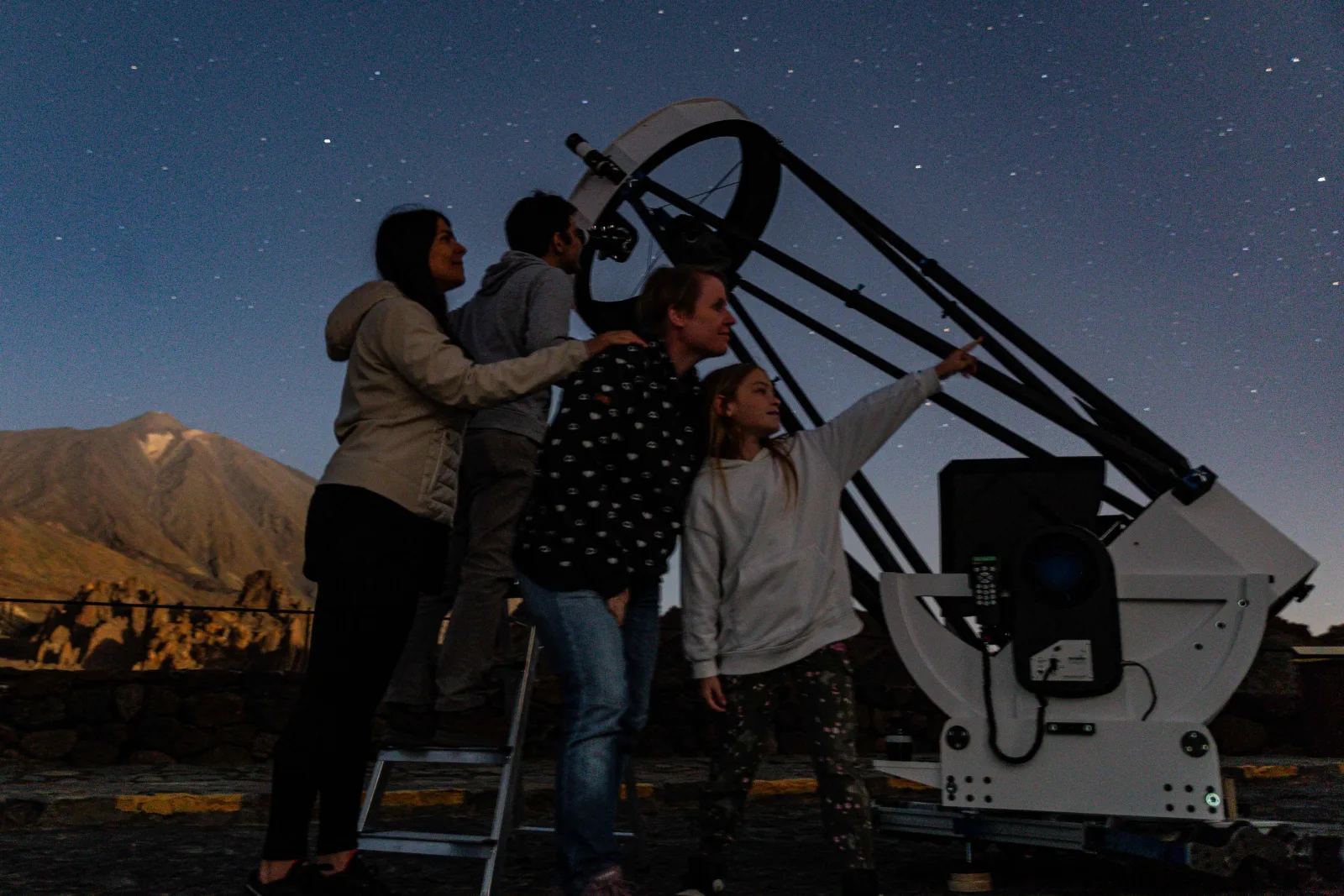
- Planets, galaxies, nebulae and clusters through a 12-inch Dobsonian
- A free astrophotography portrait of your group under the stars
What's Included
- Small-group stargazing session with Starlight-certified guides
- Use of a 12-inch Dobsonian telescope and green laser pointer
- Glass of Cava or a non-alcoholic alternative at sunset
- Astrophotography portrait of you under the night sky
- Hotel pickup and drop-off within the south-coast zone (VIP option only)
- Warm jacket loan on cold nights (VIP option only)
Book Your Experience
Check Availability & Prices
Select your preferred date and time. Instant confirmation — free cancellation up to 24 hours before departure.
How Booking Works
Four steps from date picker to the caldera floor.
Pick Your Night, Not Just Your Tour
Check the moon phase first. A dark-sky week shows the Milky Way; the nights around full moon trade it for a spectacular Moon in the eyepiece. The date picker below shows live availability for every date.
Choose Pickup or Self-Drive
Pickup options collect you from the south-coast resorts and cost more. Self-drive options are cheaper but require a rental car — a taxi or public transport will not get you to the meeting point.
Book Free-Cancellation and Watch the Forecast
Almost every tour here cancels free up to 24 hours ahead, and operators reschedule or refund when cloud or wind closes the caldera. Book early in your trip so a weather call still leaves you a second chance.
Get the WhatsApp, Then Pack Layers
Most operators confirm the exact meeting time by WhatsApp on the day — the time on your voucher is generic. Bring a warm jacket, long trousers and closed shoes whatever the coast is doing.
Can't Make These Dates?
Browse More Available Options
Other ways to see Teide National Park and Tenerife: sunset tours, Teide Observatory visits and stargazing sessions on other dates.
How It Actually Works
What a Teide Stargazing Night Really Looks Like
Here is the part almost every listing skips: you do not stargaze on Mount Teide. An ordinary cable car ticket ends in the late afternoon, the special sunset ride comes back down after sunset for stargazing at the base, and the summit cone needs a permit, so commercial stargazing happens at public viewpoints on the caldera floor and the surrounding ridges, roughly 1,400–2,300 m up. That is not a downgrade — it is why the tours work. Here is the shape of the evening.
- Late afternoon — the WhatsApp arrives — Most operators confirm your exact meeting time by message on the day, because sunset moves by more than an hour across the year. The time printed on your voucher is generic; ignore it and read the message.
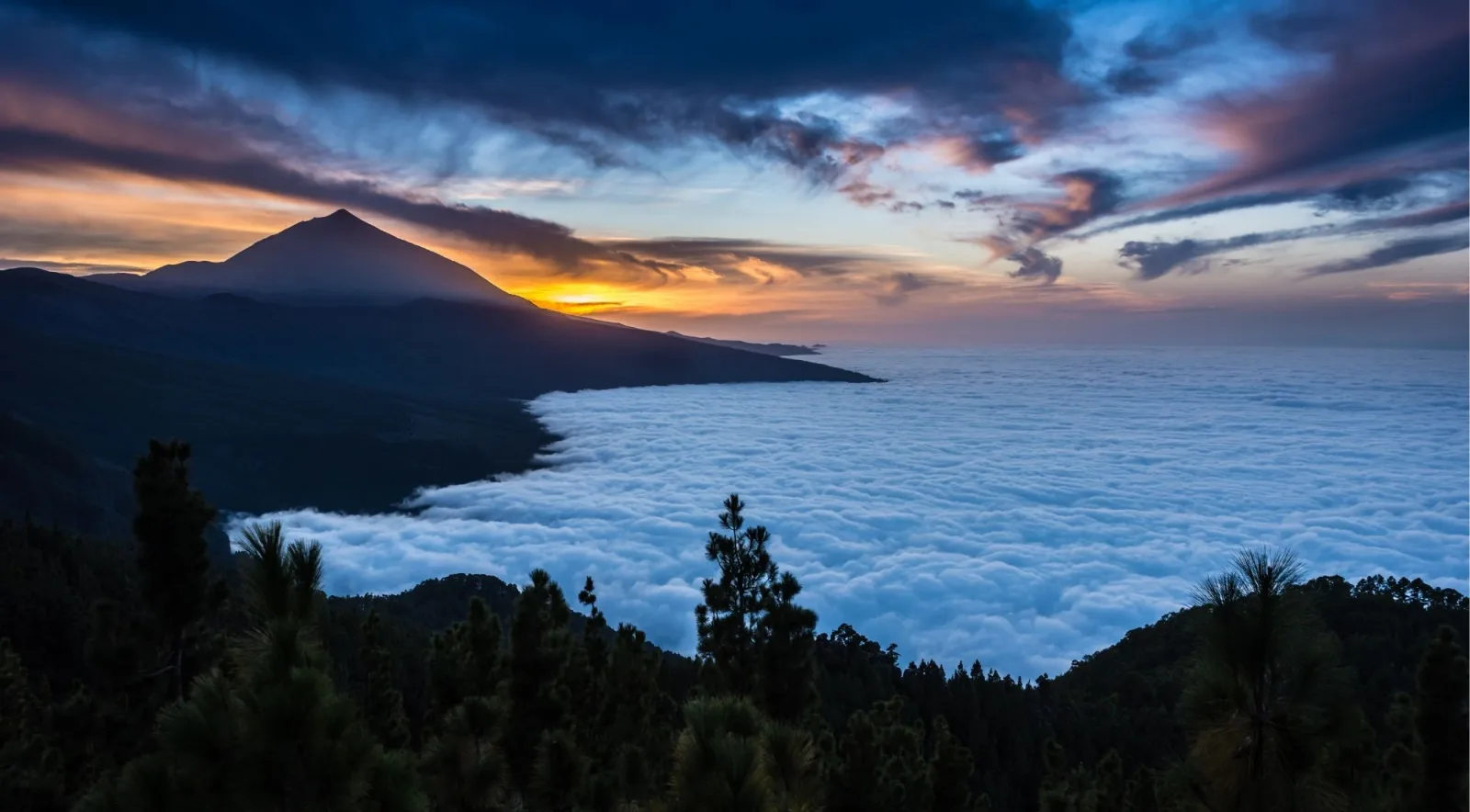
- The climb out of the resort weather — The road leaves the coast at 25 °C and enters the pine belt. Somewhere around 1,200 m you break through the mar de nubes — the inversion layer that traps the island's cloud, and its light pollution, below you.
- Sunset from a viewpoint, not from the peak — Sunset stops sit on the western rim, looking over La Gomera, La Palma and El Hierro. Most tours hand out a glass of Cava here. The peak itself is behind you, catching the last light.
- The wait for real darkness — Nothing much happens for about forty minutes after sunset while the brightest twilight fades and your eyes adapt; full darkness takes roughly 75 to 95 minutes. Telescope-only sessions start at exactly this point, which is why they are shorter and cheaper.
- The sky tour, then the eyepiece — A green laser traces constellations and the guide gives you the mythology and the physics. Then you queue for the telescope — the Moon and planets if they are up, galaxies, nebulae and clusters if the Moon is not.
- The photo, and the drive down — Almost every operator ends with a long-exposure portrait of you under the stars, sent afterwards at no charge. Then it is an hour back down the mountain — which is exactly the part a pickup option is worth paying for.
Photo Gallery
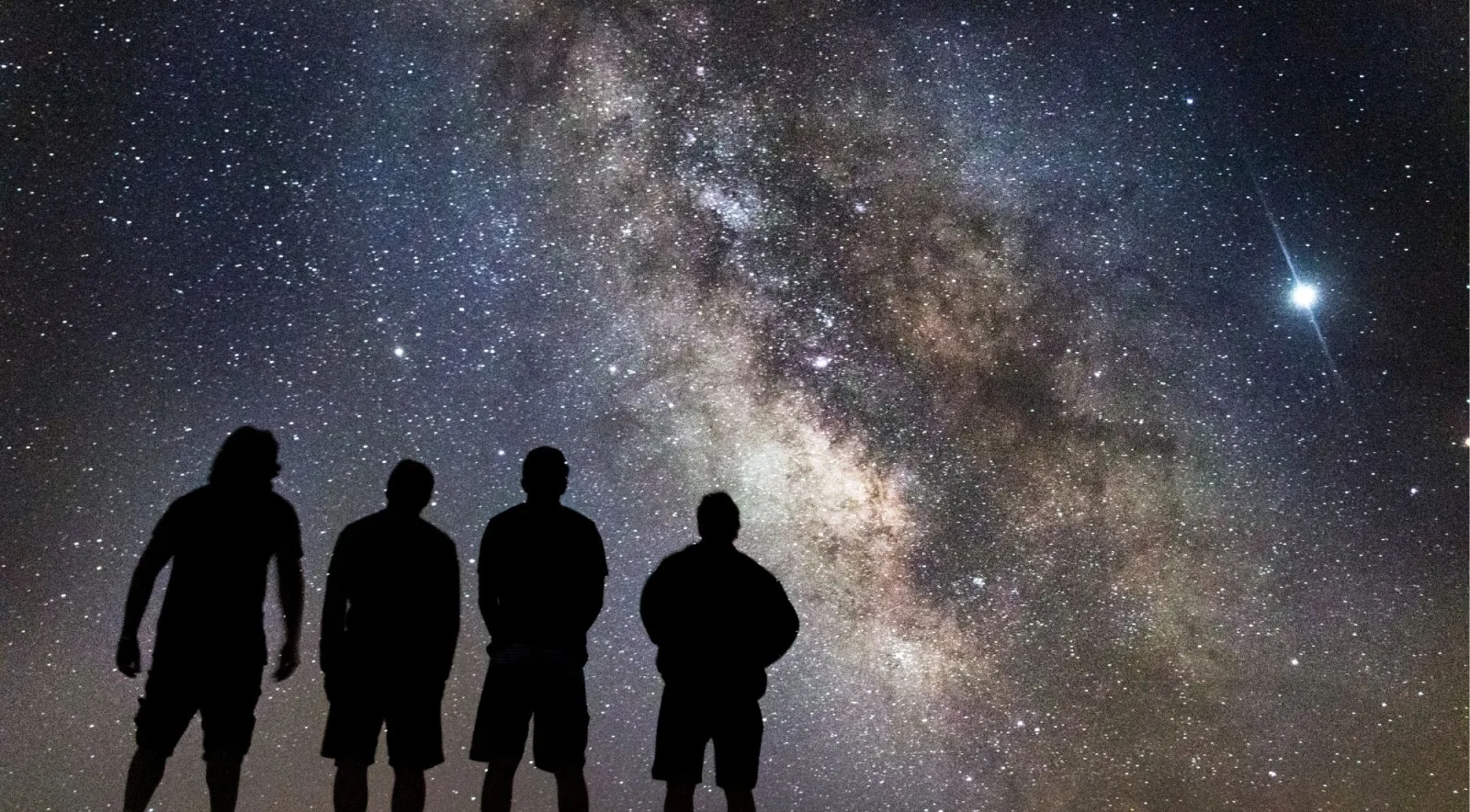
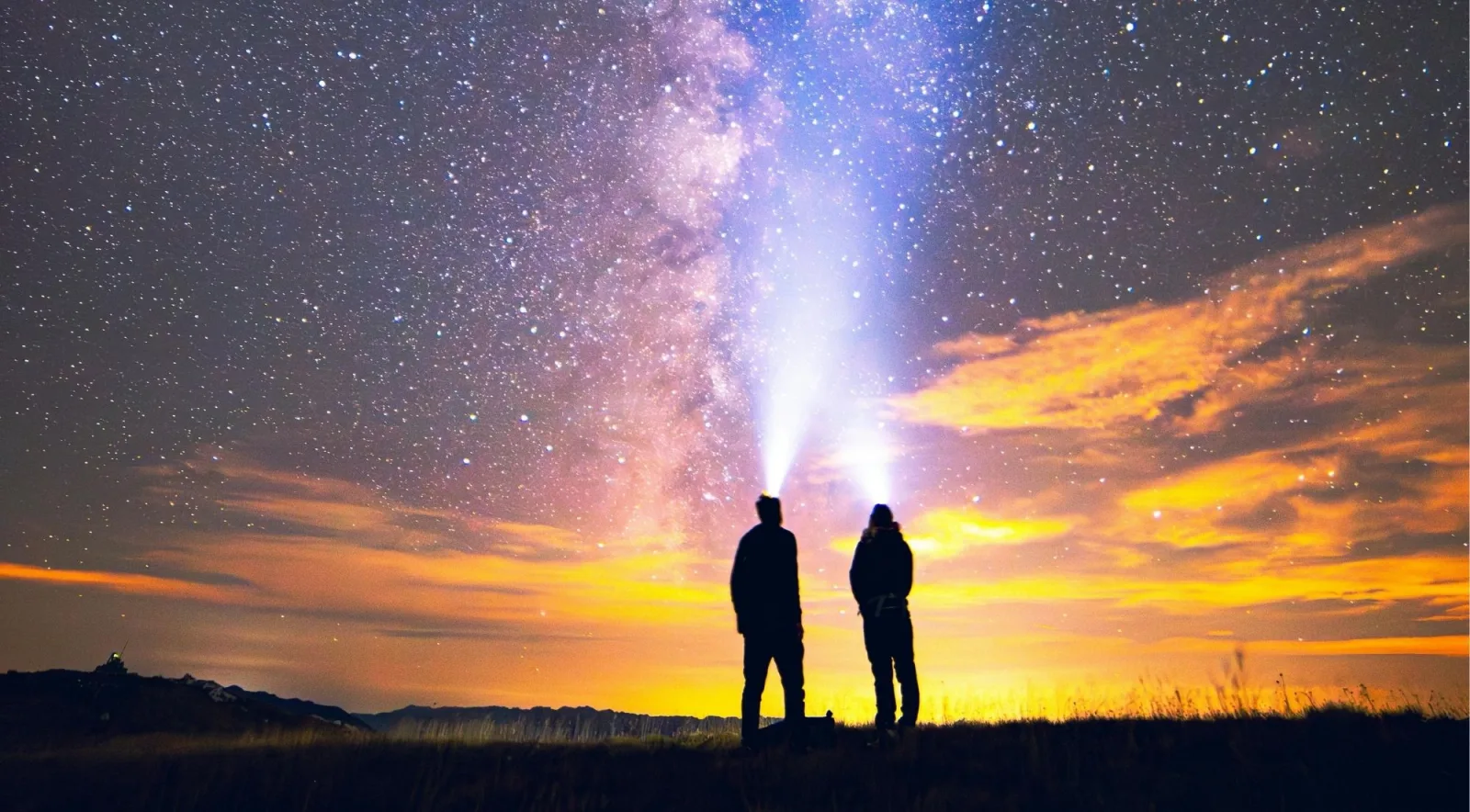
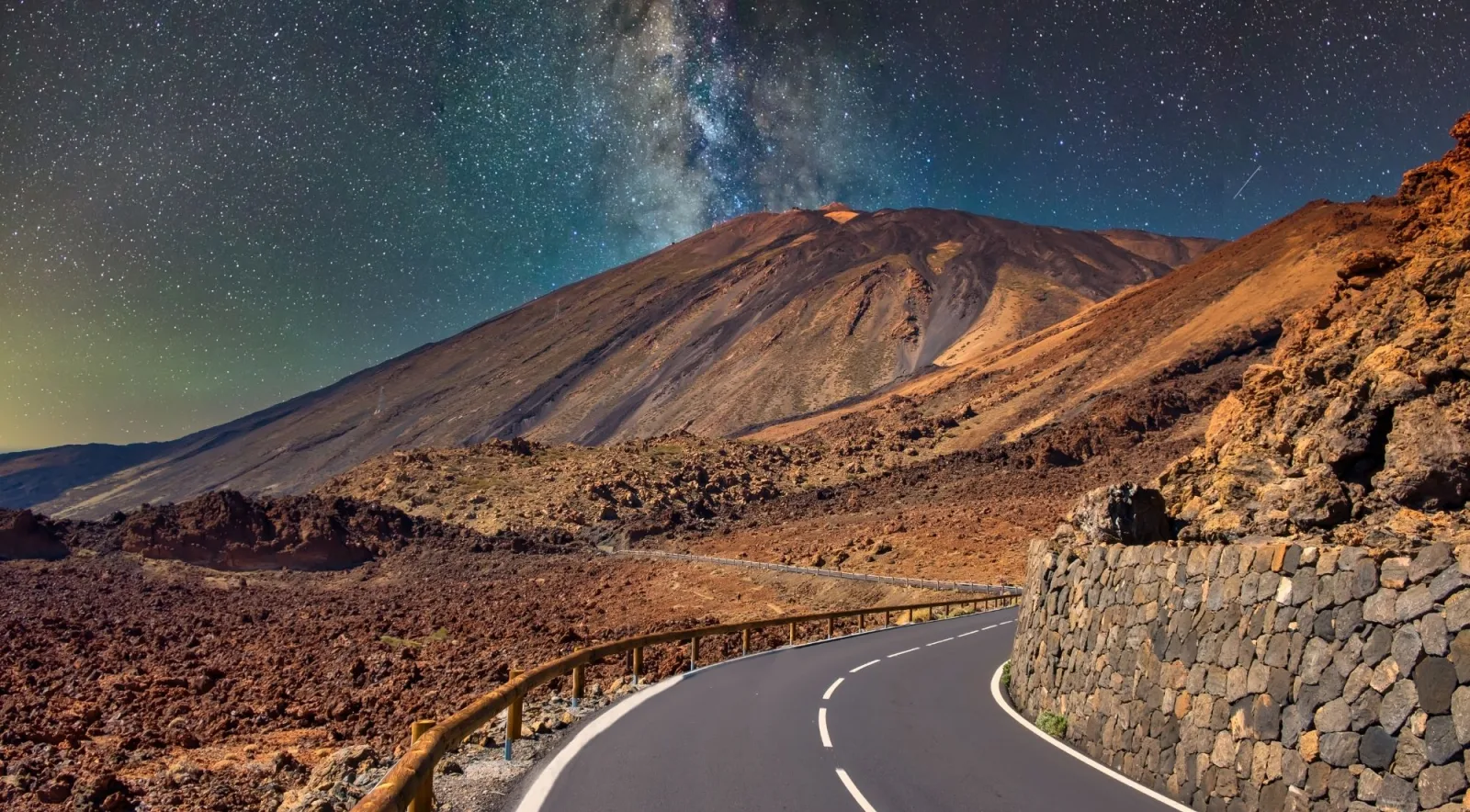
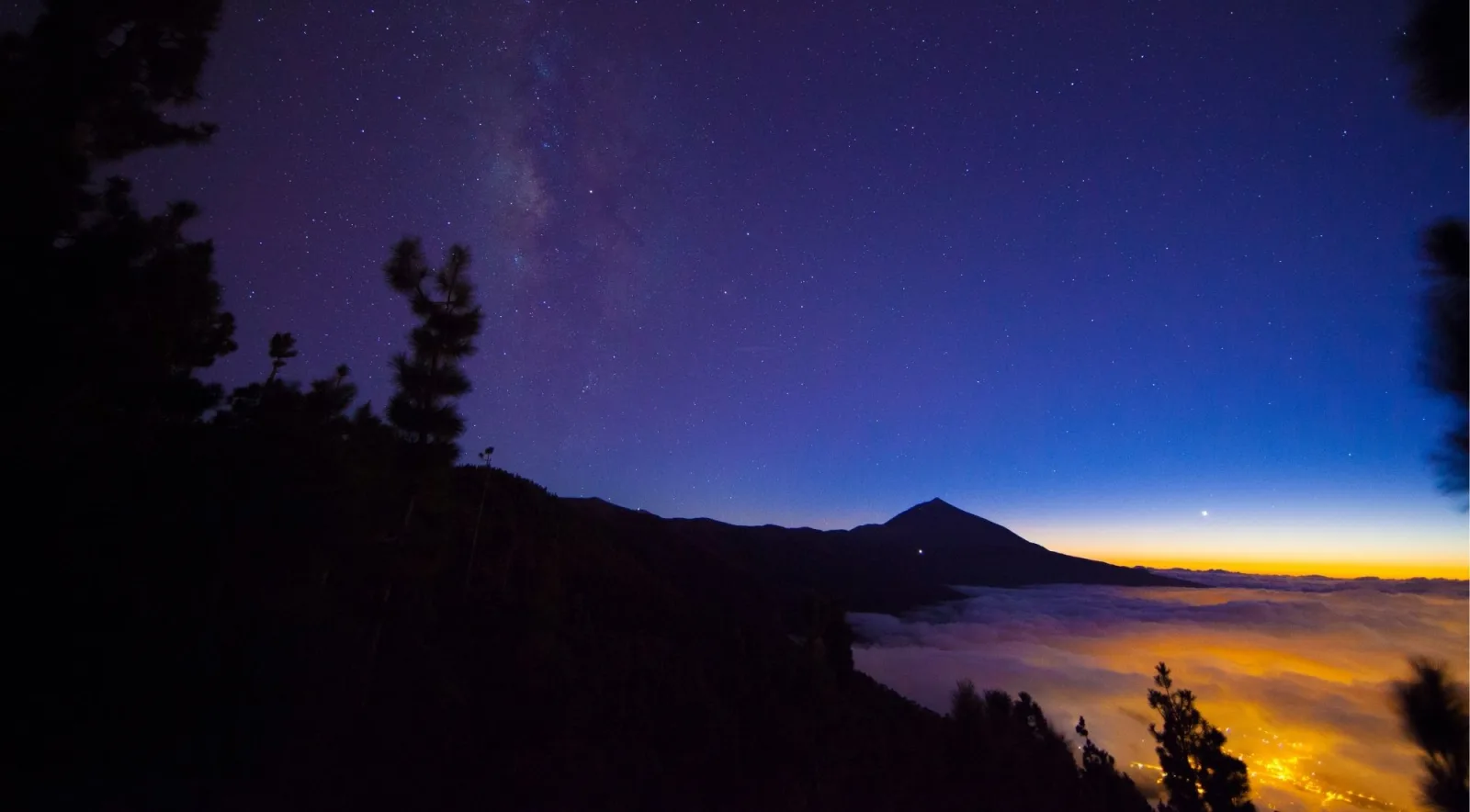
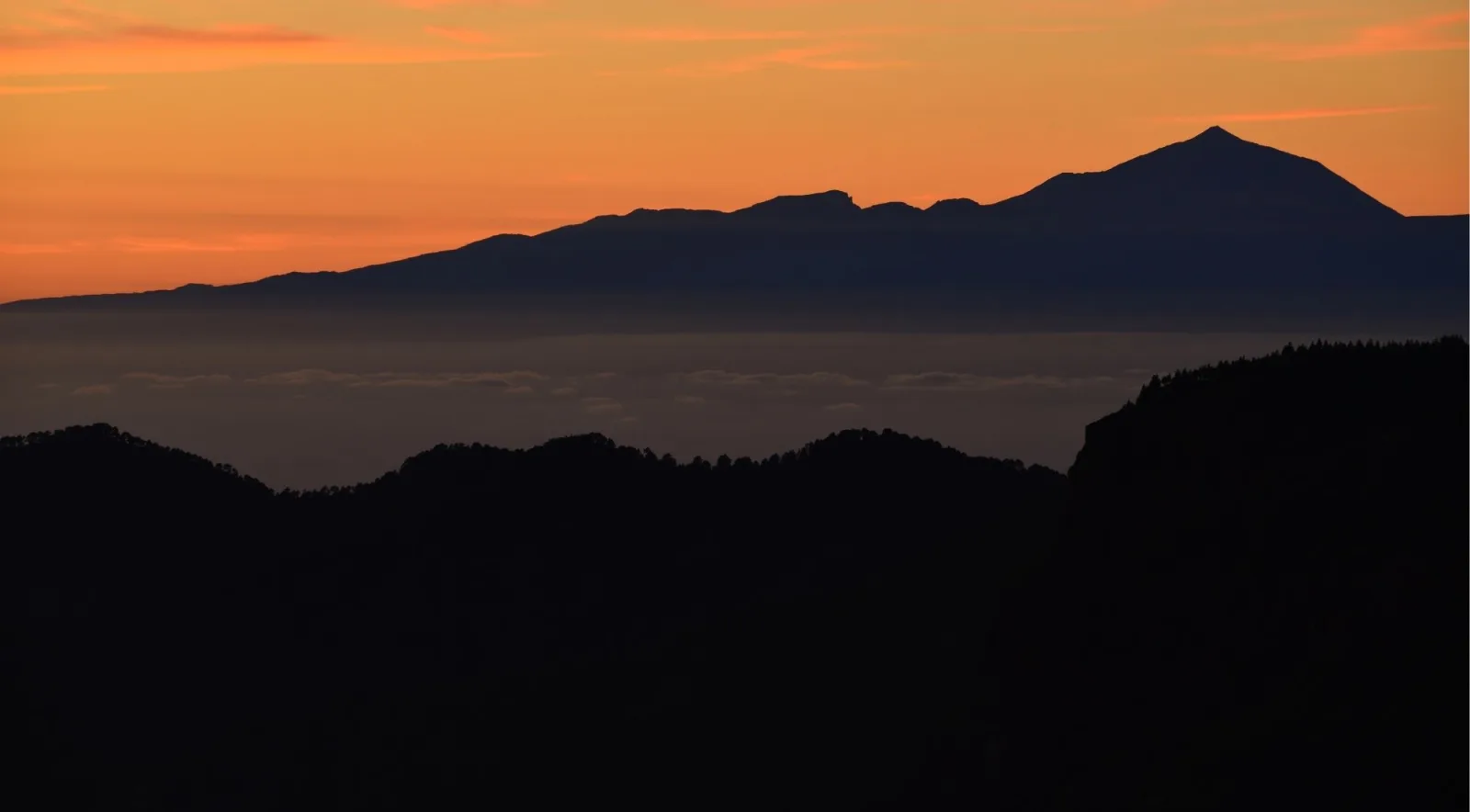
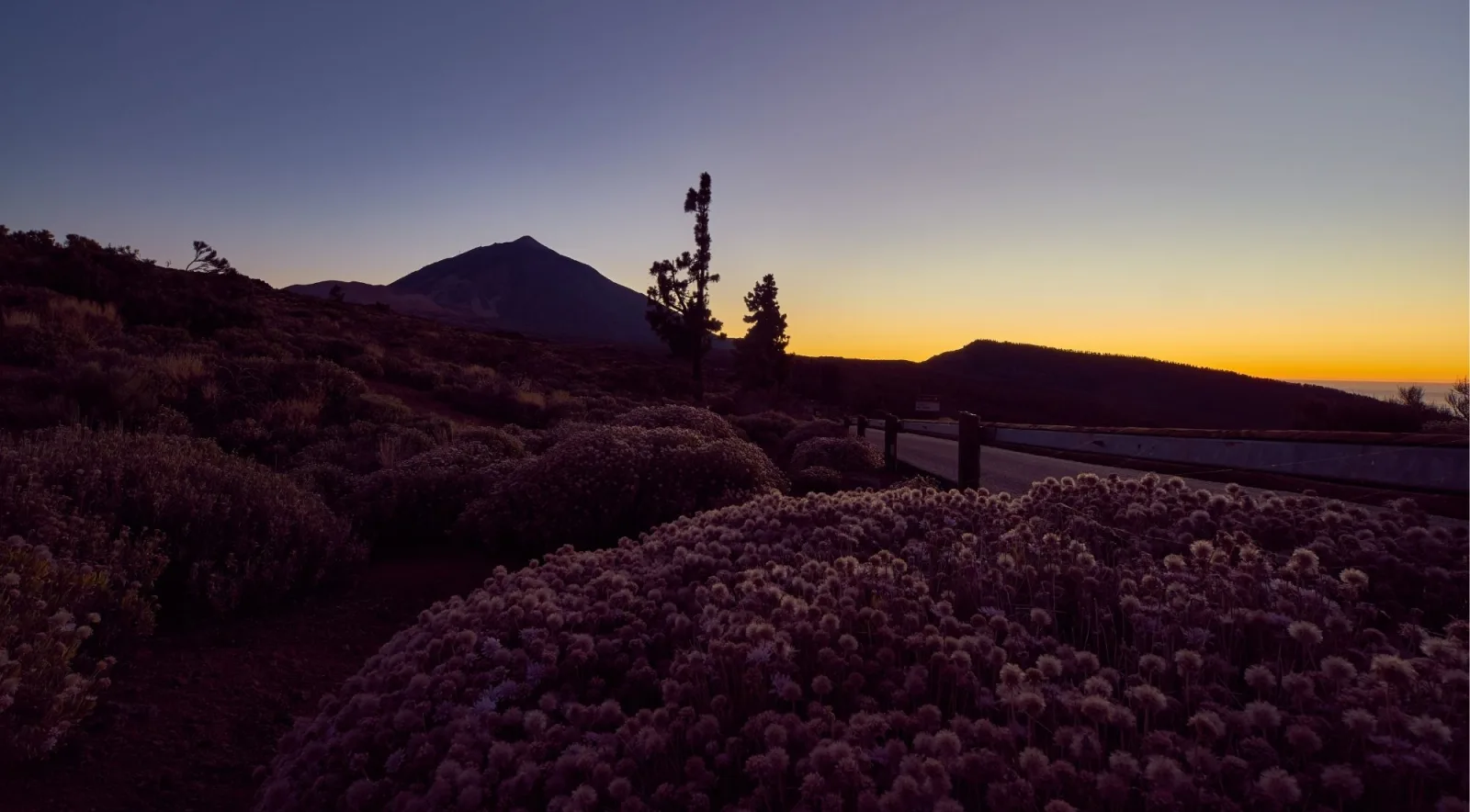
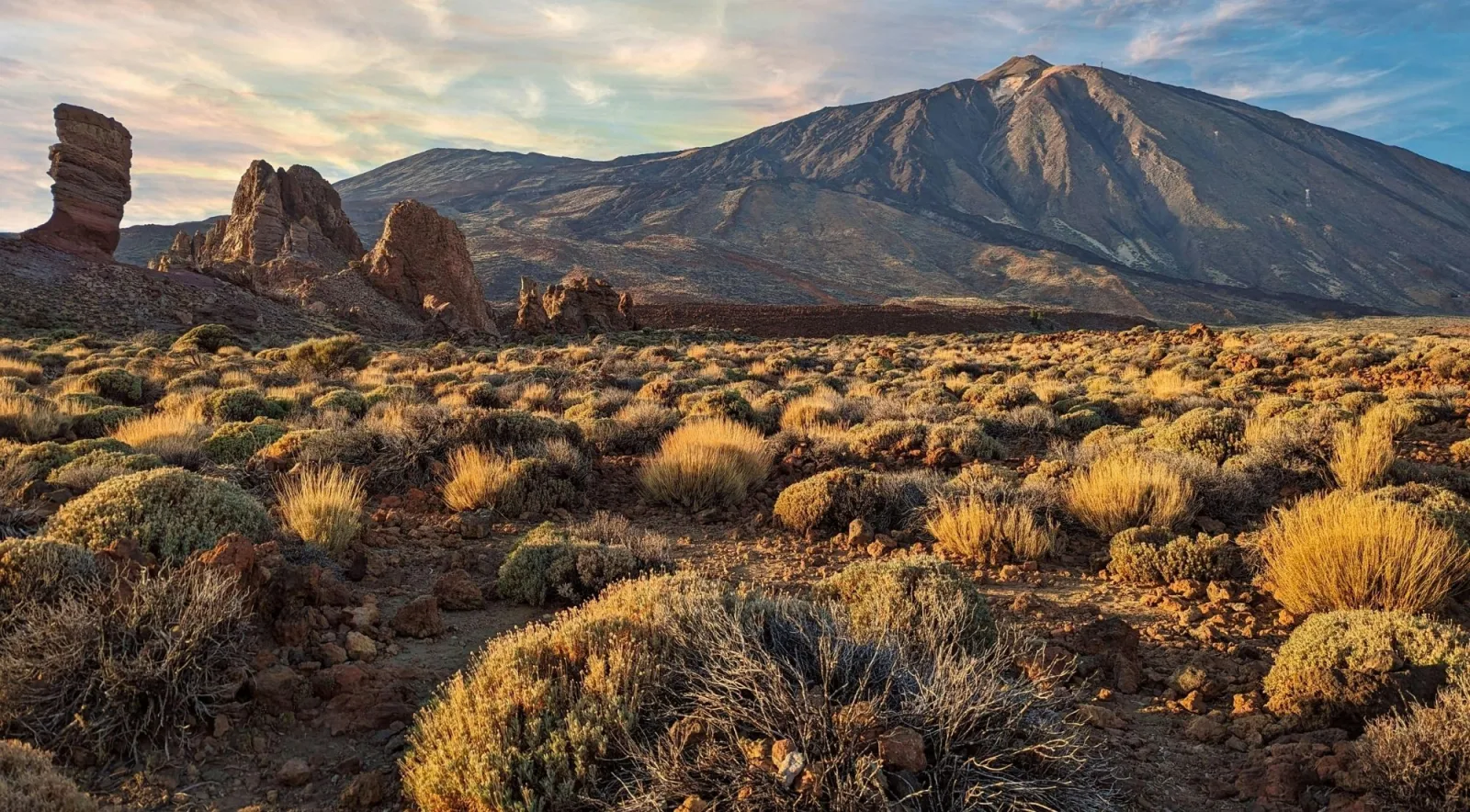
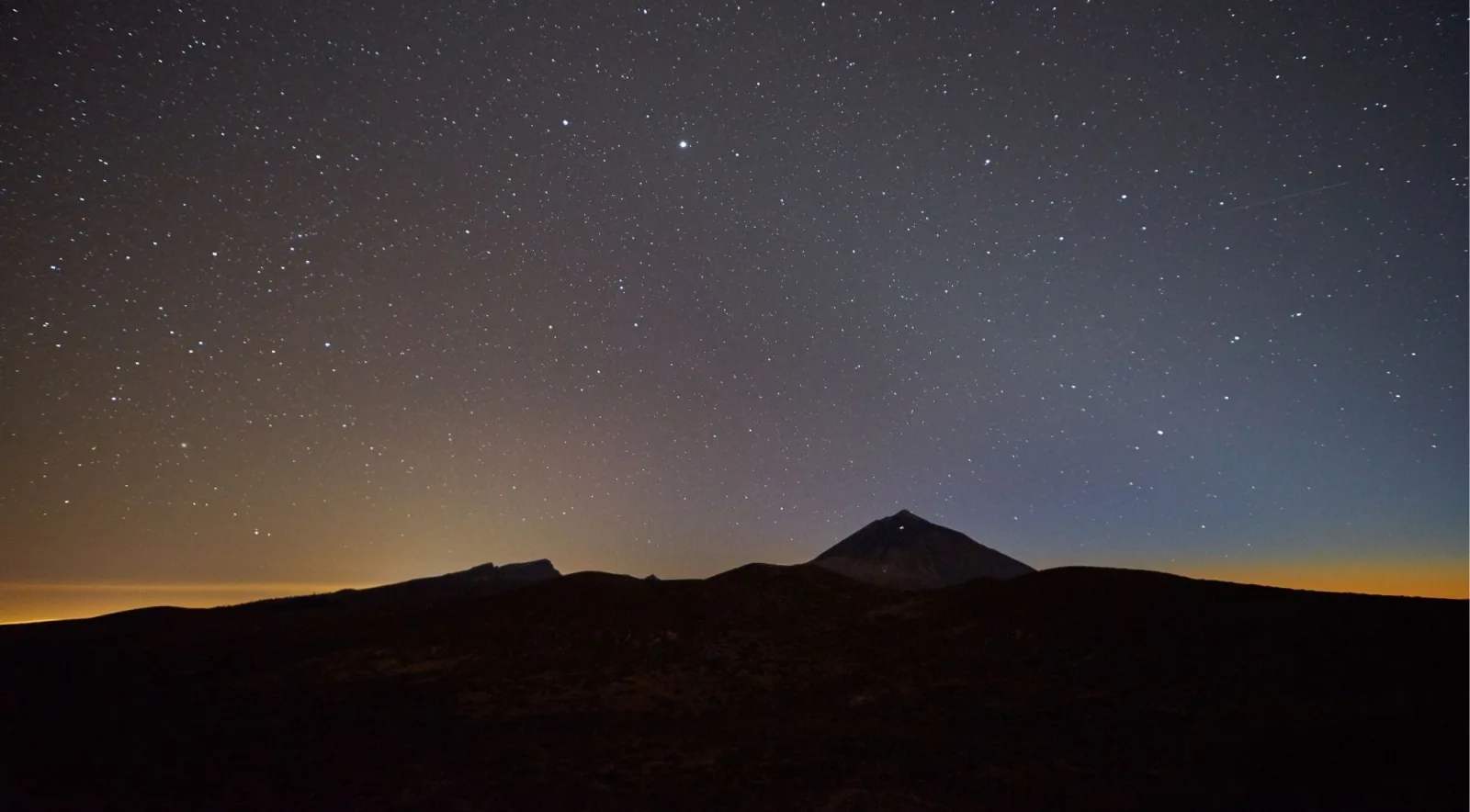
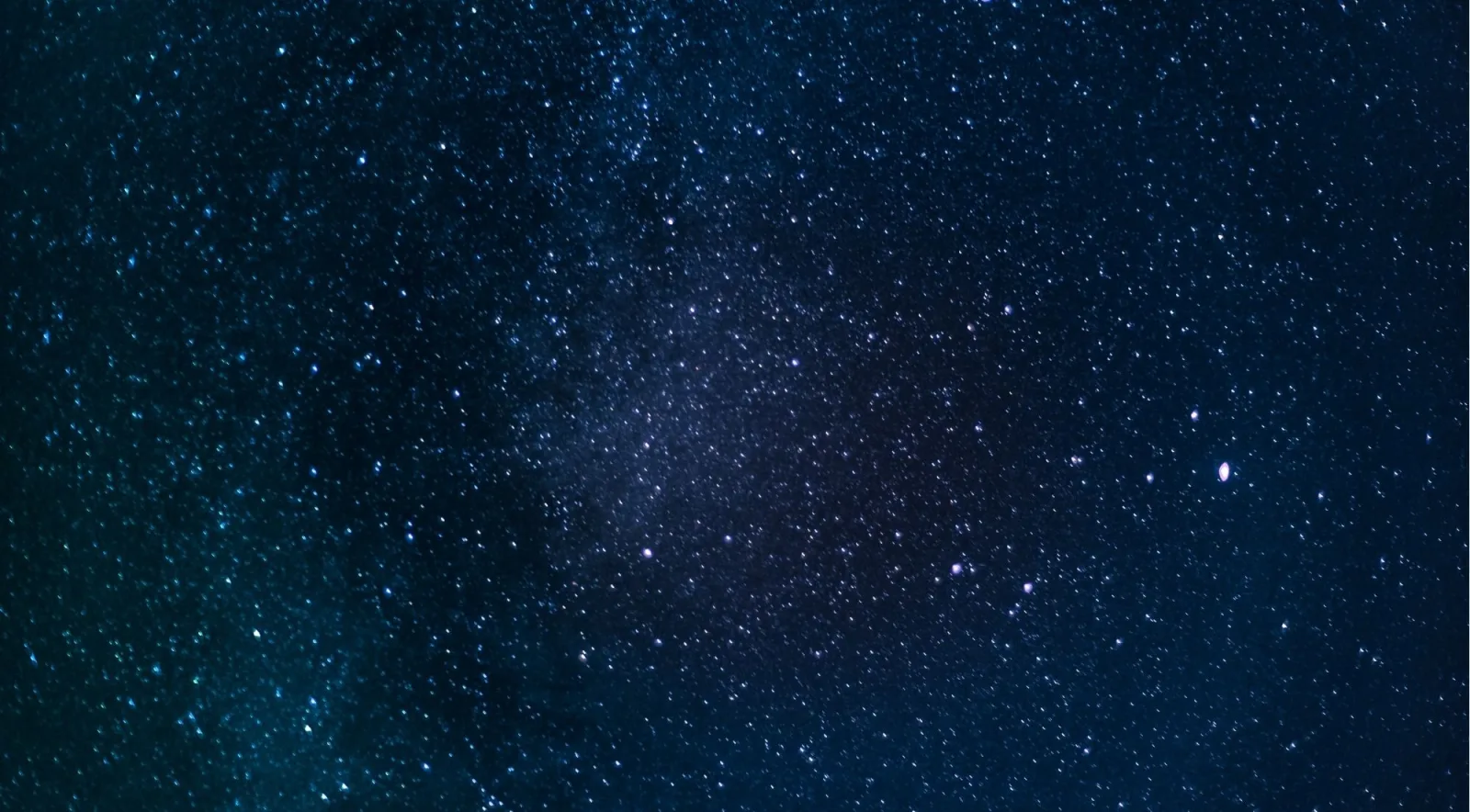
Teide After Dark
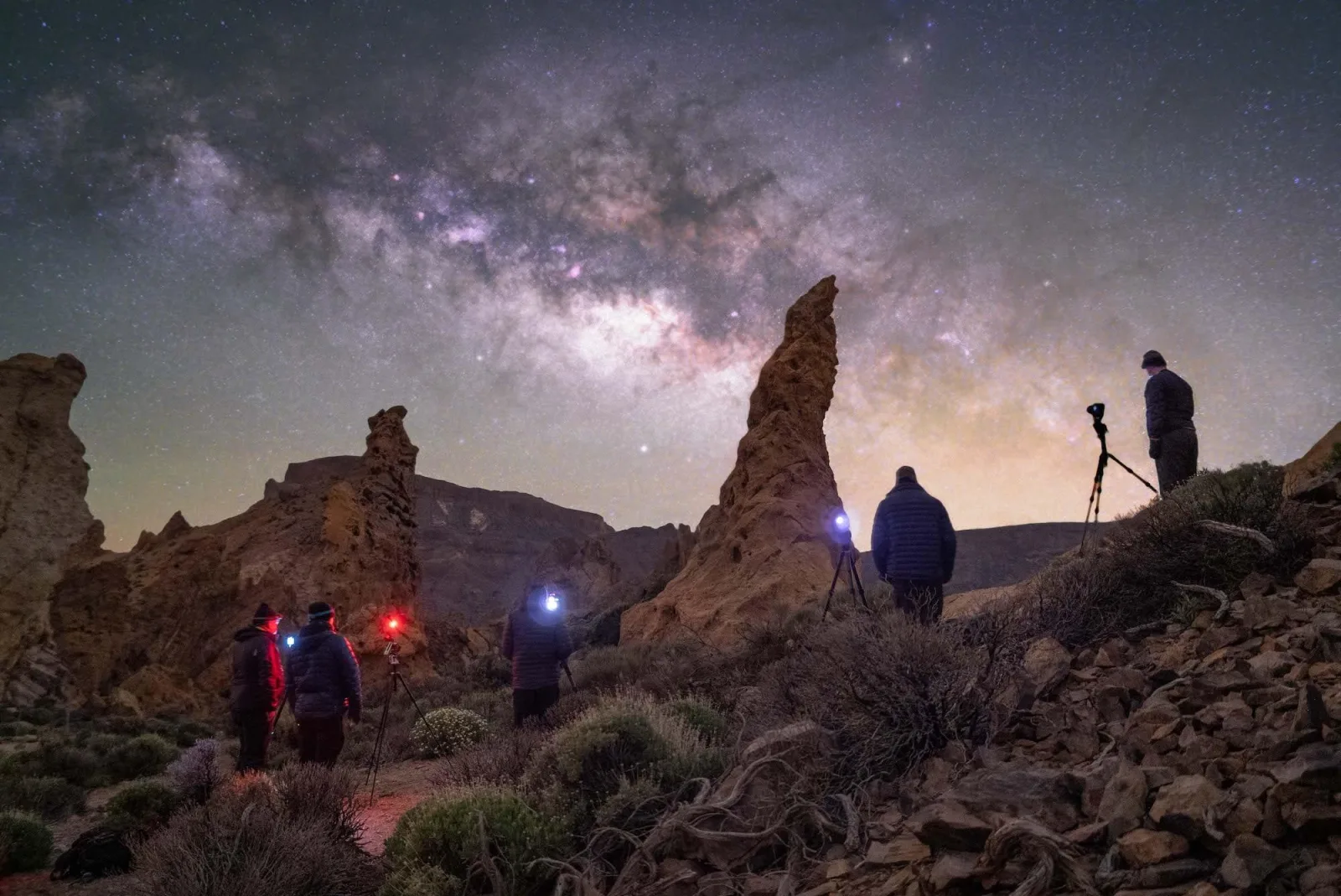
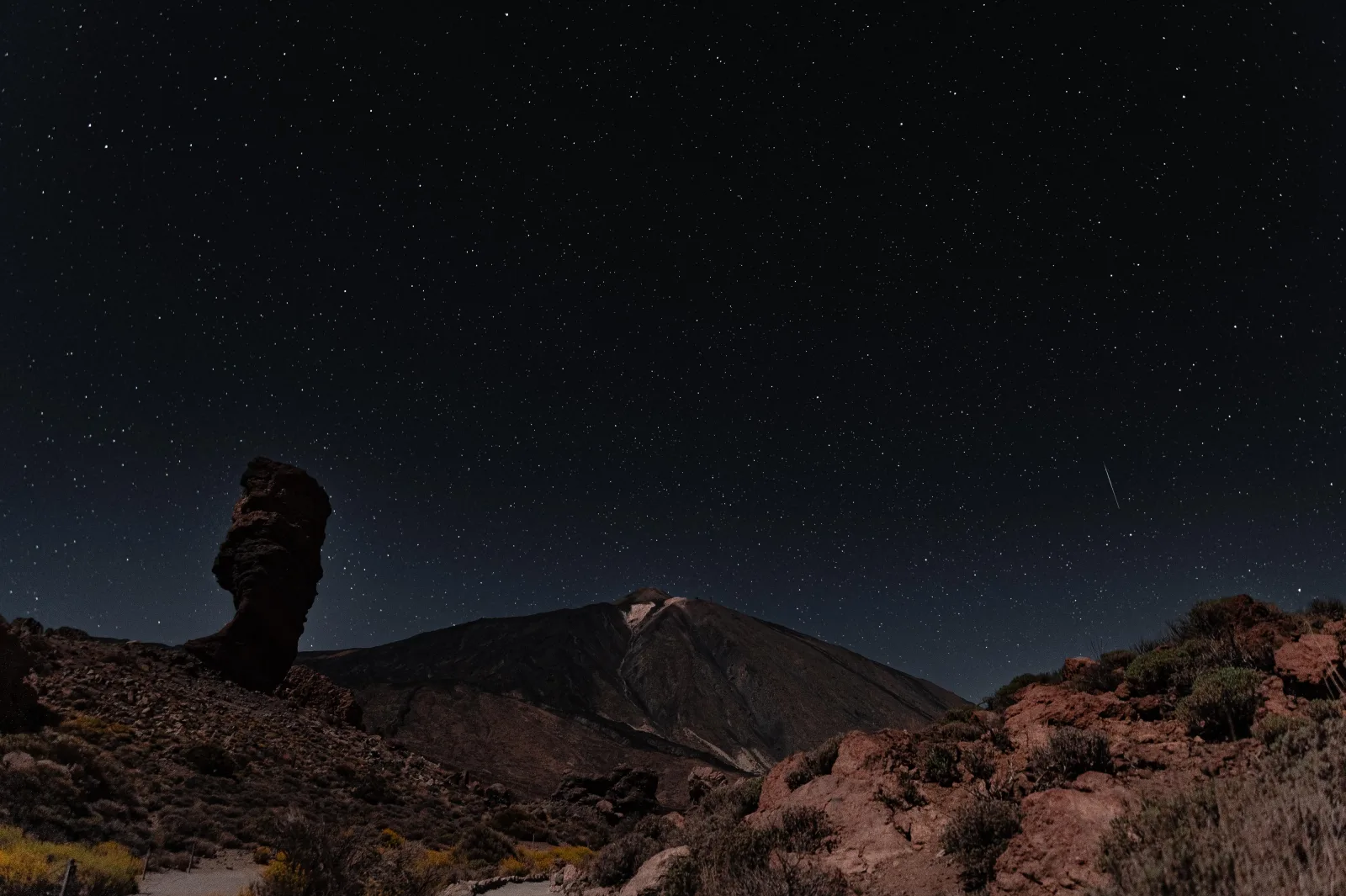
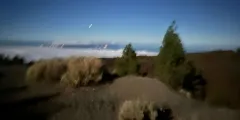
The caldera, the sea of clouds and the sky the tours are built around.
Guided Tour vs Telescope Session vs Driving Up Alone
Three different ways to spend a night under the Teide sky, and what each one actually gets you.
| Feature | RECOMMENDED Sunset + Stargazing Tour | Telescope-Only Night Session | Driving Up and Stargazing Alone |
|---|---|---|---|
| What the evening is | Sunset above the cloud layer, then a guided sky tour and telescope time | Pure observation, starting shortly after dark | Whatever you can find in the dark on an unlit mountain road |
| Telescope | 8- to 12-inch instruments, set up and aligned for you | Up to a 32-inch Dobsonian on the large-telescope tours | ✗ None, unless you brought your own |
| Guide | ✓ Starlight-certified guide, laser-guided constellation tour | ✓ Astrophysicist or Starlight-accredited guide | ✗ You and a phone app |
| Getting there | Pickup from the south-coast resorts on most options | Self-drive — you meet the guide inside the park | Self-drive, unlit roads, no fuel or services after dark |
| Time it takes | 3–9 hours, depending on pickup and whether dinner is included | 1.5–3 hours at the observing site | 2+ hours of driving on top of however long you stay |
| Warm gear | Jackets loaned on several tours — check your option | Bring your own; it is often near freezing in winter | Entirely your problem, and easy to underestimate |
| If the weather closes in | ✓ Operator reschedules or refunds; free cancellation 24 h ahead | ✓ Operator reschedules or refunds | ✗ You drive an hour up and an hour back for nothing |
| Best for | First-timers, couples, anyone without a car | Repeat visitors and anyone who wants eyepiece time | Photographers with their own kit and a plan |
| Starting price | From $41 per person | From $41 per person | Free, plus fuel and a rental car |
| Check Availability | Browse Sessions |
More Options
Compare Every Teide Stargazing Tour
Sunset-and-stars combos, telescope-only sessions, dinner tours and the daytime observatory visit — side by side.
 LOWEST PRICE
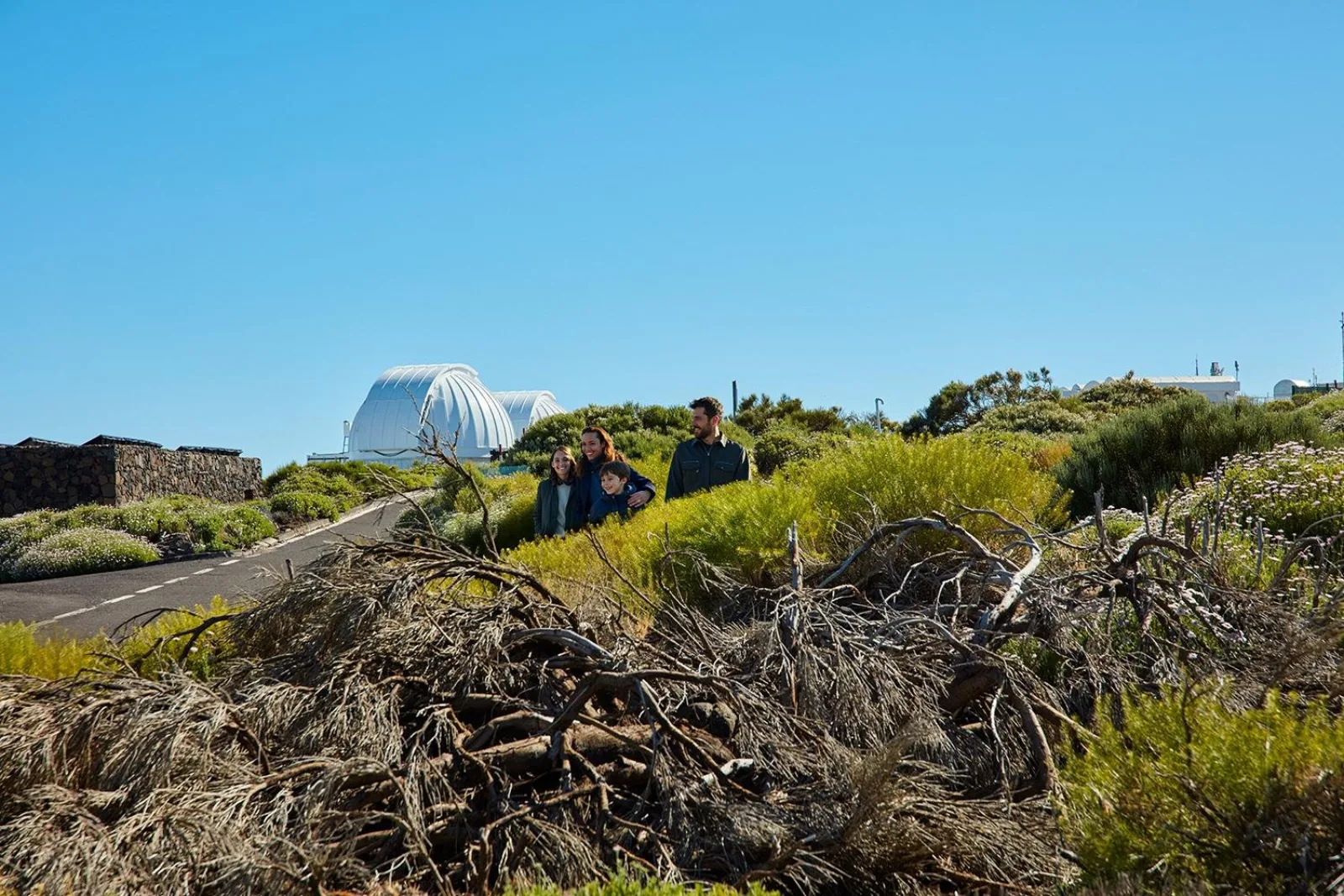
Tenerife: Mount Teide Observatory Guided Tour
Go inside the Izaña research observatory at 2,390 m, view the Sun through two solar telescopes and step inside a night telescope. Daytime only. From $24.
 SMALL GROUP
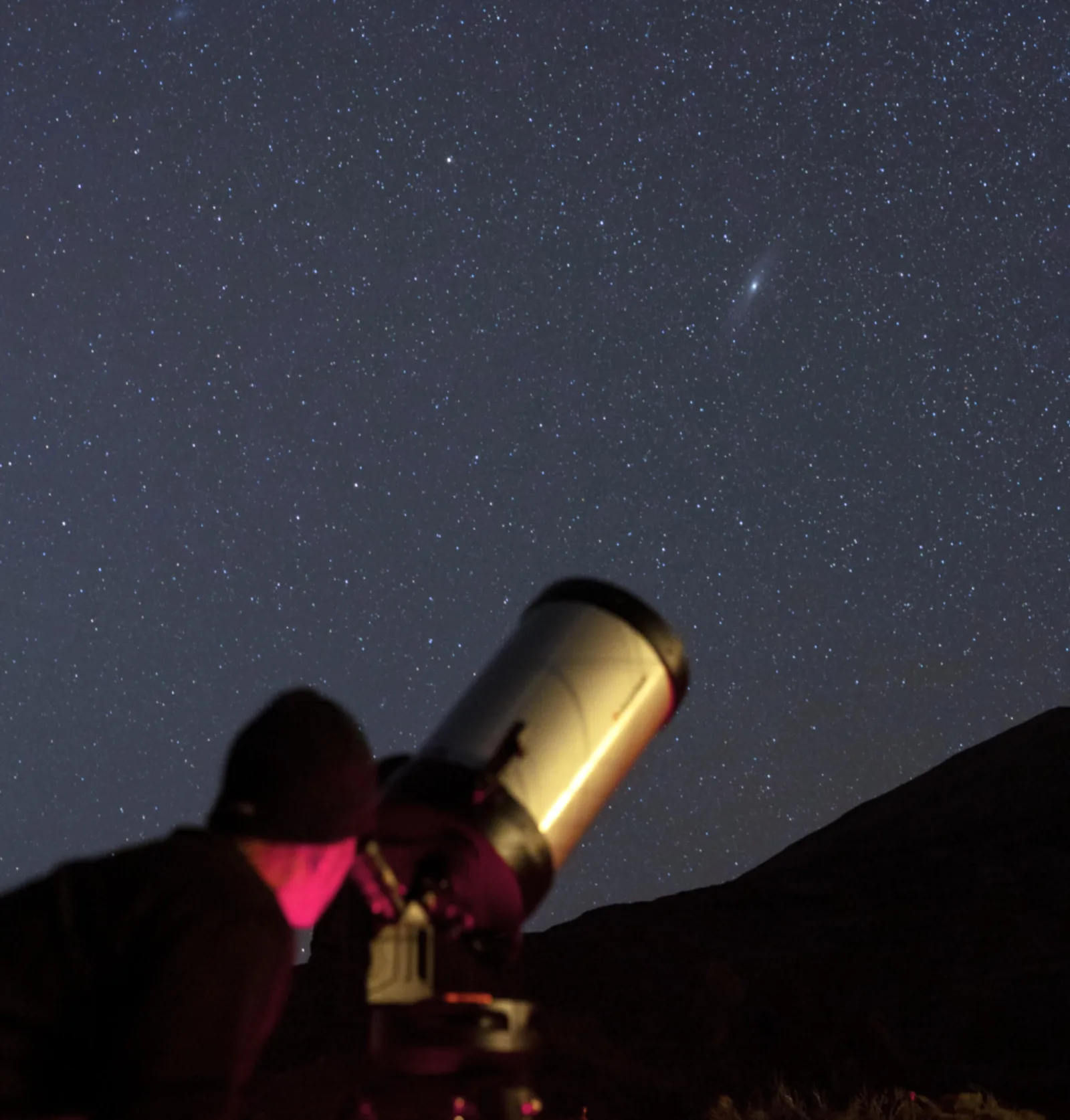
Tenerife. Stargazing in Teide National Park
A two-hour small-group session at Ermita de las Nieves in Teide National Park with a Starlight-accredited guide, optics and free photos. From $41.
 MOST BOOKED
Tenerife: Teide National Park Sunset & Stargazing Tour
Tenerife's most-booked Teide night tour: coach pickup from Costa Adeje, sunset above the clouds, optional 3-course dinner and telescope stargazing. From $46.
 BIGGEST TELESCOPE
Teide National Park: Guided Large Telescope Stargazing Tour
A 32-inch Dobsonian — the largest private telescope in the Canary Islands — plus night-vision optics and an astrophotography package, in groups of 12. From $76.
 DINNER INCLUDED
Teide: Guided Sunset & Stargazing Tour by Night with Dinner
Nine-hour Teide night tour: pickup north or south, photo stops in the park, dinner in the caldera, then an astronomer-led telescope session. From $103.
Before You Book
What Nobody Tells You About Stargazing at Teide
Three different products are sold under one search term, and the moon phase matters more than the tour you choose.
Search “Teide stargazing tour” and you will be shown three genuinely different products, priced from $24 to $247, with no obvious signal about which is which. One is an evening coach trip built around sunset and dinner. One is a short, serious telescope session you drive yourself to. And one — the cheapest, with nearly 900 reviews — is a daytime visit to a solar research observatory where you will not see a single star. Sorting that out is most of the work of booking well — our complete guide to stargazing at Mount Teide walks through all of it in one place.
You do not actually stargaze on Mount Teide
This is the first thing to unlearn. An ordinary cable car ticket to the upper station ends in the late afternoon (the last ride down is between 16:50 and 18:30, depending on the season), and the summit cone above it is reached only via the Telesforo Bravo path, which requires a booked permit. The one exception is a dedicated sunset ticket, which takes you up for sunset and brings you back down to the base station before the stargazing starts. Nobody observes from the top at night.
What the tours actually do is drive up into the caldera — the vast collapsed crater the peak sits inside — and observe from public viewpoints between roughly 1,400 and 2,300 metres. One operator states it flatly in their own listing: the activity is carried out at public viewpoints where it is allowed by local authorities, and not on Mount Teide.
That is not a compromise. It is the entire reason Tenerife works as a stargazing destination. The island’s cloud sits in a persistent inversion layer below about 1,200 m, and so does the light from Santa Cruz, Los Cristianos and every hotel on the coast. Drive above it and you are standing on a dark island in the sky, which is why Teide National Park has been a certified Starlight destination since 2014 and why professional observatories chose the ridge above it. Our guide to the best places to stargaze in Tenerife compares the viewpoints up there.
The moon phase matters more than the tour
Of every variable you control, this is the one that most changes what you see — and almost nobody mentions it before you have paid.
On a dark-sky night around new moon, the Milky Way is a naked-eye object from the caldera floor. You do not need the telescope for it; you need about twenty minutes for your eyes to adapt and then it is simply there, a structured band of light with visible dust lanes — see can you see the Milky Way in Tenerife for the best months and viewpoints. Telescopes then go hunting for galaxies, nebulae and star clusters.
Around full moon, none of that is available. The Moon washes the sky out the way a streetlight does, and guides pivot to the Moon itself — which, in fairness, is magnificent through a good instrument — plus the planets and the brightest clusters. Seasonality adds a second layer: the planets move from year to year (in 2026–27 Saturn’s rings are an autumn and early-winter evening sight, Jupiter’s Galilean moons a late-winter and spring one), while winter brings longer, darker nights and genuinely cold ones.
The practical move is to check a lunar calendar before you check tour availability (and, as our full moon vs new moon guide explains, when the Moon rises and sets, not just its phase), and to book a night in the first half of your trip so a weather cancellation still leaves you a second attempt. Our Teide stargazing weather guide shows how to know if tonight will be good. Our month-by-month best-time guide sets out which objects are up when, and our Tenerife night sky guide walks through the constellations and planets season by season.
The three products, plainly
Sunset-and-stargazing tours ($41–$103) are the default and the reason most people come. You are collected from the south-coast resorts or meet the group in your own car, watch the sun drop behind La Gomera and La Palma with a glass of Cava — see the best places to watch it if you’d rather choose your own viewpoint — then get a laser-guided constellation tour and telescope time. Several include a three-course dinner at a restaurant inside the park. Expect three to nine hours depending on how much of that you buy. Our guide to planning the whole evening sets out the timing from arrival to full dark.
Telescope-only sessions ($41–$76) skip the sunset and the transport. You drive to a viewpoint, the session starts around forty minutes after sunset, and you get 1.5 to 3 hours of pure observation with a Starlight-accredited guide or, on one tour, a working astrophysicist. The largest instrument in the catalogue is a 32-inch Dobsonian, described by its operator as the biggest private telescope in the Canaries — and aperture is the single thing that decides whether a faint galaxy shows structure or stays a smudge. These sessions rate highest of anything here, and they are the better second night.
The Teide Observatory day visit ($24) is a different animal entirely. It is a guided ninety minutes inside the Izaña research site at 2,390 m: two solar telescopes on sunspots and flares, then the inside of a night telescope dome. No stars. Book it alongside an evening tour, never instead of one — the full comparison is here, or read how to visit the Observatory and what you’ll actually see.
Choosing between them
If it is your first time, you have no car, and you want the whole spectacle, book a sunset-and-stargazing tour with pickup. If you have a rental car and care more about what is in the eyepiece than about the coach, book a telescope-only session. If you have already done one and want depth, book the astrophysicist or the 32-inch. We have written the decision out properly in which Teide stargazing tour is right for you, with the specific tours that fit each case.
Two things to get right on the night
Dress for a different island. Operators quote roughly 0–4 °C from October to March and 10–15 °C from April to September at the observing sites, plus wind, while the resort you left is fifteen degrees warmer. A few tours lend warm coats; most do not. Long trousers, closed shoes and a real jacket, every time.
Read the WhatsApp. Because sunset moves by more than an hour across the year, most operators confirm the exact meeting time by message on the afternoon of the tour, and several state that the time printed on your voucher is generic. At least one treats being unreachable as a no-show with no refund. Keep your phone on, and there are no toilets at the viewpoints — sort that out on the way up.
Everything below compares the tours themselves: live GetYourGuide prices, ratings and review counts, what each night actually includes, and where each one meets. Prices and availability update from GetYourGuide, and booking through the date picker costs you nothing extra.
Guest Reviews
What Stargazers Say
4.7/5
from 3712 verified GetYourGuide guests
Ratings and review counts are the tour operators' live figures on GetYourGuide and may shift slightly day to day.
"Amazing tour with Mike! We had a great time with both sunset and stargazing"
"The tour was great, perfect timing with the pick-up, professional and friendly guide Phil, wonderful sunset and amazing stargazing. I would definitely recommend this tour."
"Very much enjoyed by the whole family (including teens). Many thanks."
"Jenny was absolutely lovely and so very knowledgeable! Was an amazing activity!!!"
Read all 3712 verified reviews
See All ReviewsSee the Milky Way Rise Over the Caldera
Sunset above the sea of clouds, then constellations, planets and deep-sky objects through a real telescope with a Starlight-certified guide. Free cancellation up to 24 hours before. Starting from $41 per person.
Check Availability & BookTeide Stargazing Tours — Frequently Asked Questions
The practical answers you need before you pick a date and a tour.
Prices on this site run from $24 to $247 per person. The daytime Teide Observatory visit is the cheapest at $24; guided sunset-and-stargazing tours start around $41; sessions with a large telescope or an astrophysicist sit in the $46–$76 range; and tours with a full three-course dinner and hotel pickup run $67–$103. The night hike to the summit for sunrise is the most expensive at $247. See our guide to choosing between them.
No. Commercial stargazing happens at public viewpoints inside Teide National Park at roughly 1,400–2,300 m, not on the summit cone. An ordinary cable car ticket ends in the late afternoon (the special sunset ride comes back down before the stargazing starts), and reaching the actual summit on foot requires a booked permit. One operator states it plainly in their own listing: the activity runs at public viewpoints where local authorities permit it, and not on Mount Teide.
Teide National Park records more than 300 clear or partly clear nights a year, so the season matters less than the moon phase. The nights around new moon show the Milky Way; the nights around full moon trade it for a spectacular Moon in the eyepiece. Which planets are up changes from year to year: in 2026–27 Saturn is an autumn and early-winter evening sight and Jupiter a late-winter and spring one. Winter nights are longer and darker but genuinely cold at altitude. Full breakdown in our best-time guide and what you can see in the Tenerife night sky.
Far colder than the coast. Operators quote roughly 0–4 °C from October to March and 10–15 °C from April to September at the observing sites, before wind chill, while the resorts may still be near 20 °C. Bring a proper jacket, long trousers and closed shoes — some tours lend warm coats, but most do not. See what to expect and what to wear.
No, and this is the most common booking mistake in the niche. The Teide Observatory at Izaña is a working research facility, and its guided visit runs in daylight: you observe the Sun through two solar telescopes and step inside the dome of a night telescope without observing through it. If you want stars, book an evening tour. The two pair very well on different days — see our side-by-side comparison, or how to visit the Observatory and what you'll see.
Yes — the park roads are public and the viewpoints are free. What you give up is the telescope, the guide who knows which objects are up tonight, the warm gear, and the operator who calls off a bad-weather night before you drive an hour up an unlit mountain road. Our self-drive versus guided guide covers the trade-off, our guide to the best places to stargaze in Tenerife compares the viewpoints, and our guide to planning the evening gives the timing from sunset to full dark.
It depends on the option. Tours with hotel pickup collect from the south-coast resorts — typically between El Médano and Los Gigantes — and one tour also serves Puerto de la Cruz in the north on Wednesdays, Fridays and Sundays. The cheaper self-drive options require your own rental car; operators are explicit that a taxi or public transport will not be accepted, because you may need to follow the guides between viewpoints.
On a clear night away from full moon, yes — the galactic band is a naked-eye object from the park, and no telescope is needed for it. Moonlight is the limiting factor, not cloud: check a lunar calendar, and when the Moon rises and sets, before you lock in a date (see full moon vs new moon for Teide stargazing). Around full moon the guides pivot to the Moon, the planets and bright star clusters instead. Full detail on best months and viewpoints in can you see the Milky Way in Tenerife.
Operators monitor the forecast and contact you to reschedule or refund when conditions will not allow observation. Almost every tour on this site also offers free cancellation up to 24 hours before departure. Book a night early in your trip so a weather call still leaves you time for a second attempt. To read the mountain forecast yourself, see our Teide stargazing weather guide.
Generally not. Several operators list this explicitly among their exclusions — there are no facilities at or near the observing viewpoints, and none on the bus. Use them before you leave the coast or at the last village on the way up.
Most are, but check the option. One operator does not accept children under five on its pickup option; another warns that high-mountain conditions may not suit children under seven to nine; and the Teide Observatory visit requires children to prove their age with a passport or ID card. The cold and the late finish matter more than the astronomy.
The catalogue on this site carries more than 16,000 verified GetYourGuide reviews across 20 tours, and ratings on the small-group telescope sessions sit near 4.9 out of 5. Tenerife is routinely named alongside Chile and Hawaii as one of the best places on Earth for a dark sky, and the park has been a certified Starlight destination since 2014. The honest caveat is the moon: book the wrong week and you get a beautiful Moon instead of a galaxy. Full planning walkthrough in our complete guide to Mount Teide stargazing.
Still have questions? Email us at info@teidestargazingtour.com
Keep Exploring
Explore More
Every Teide stargazing tour and planning guide on this site, in one place.
Teide Stargazing Tours
- Teide Observatory Tour | Daytime Visit, Solar Scopes
- Small-Group Teide Stargazing With a Starlight Guide
- Teide Sunset & Stargazing Tour | Cava, Telescope, Photo
- Teide Stargazing With an Astrophysicist | Small Group
- Teide Sunset & Stargazing Tour With Optional Dinner
- Teide Dinner, Sunset & Stargazing Safari From South Tenerife
- Teide Stargazing: Canaries' Largest Private Telescope
- Teide Guided Sunset & Stargazing Tour by Night With Dinner
Guides
- Best Places to Stargaze in Tenerife: Teide Viewpoints & Dark-Sky Spots
- Teide Stargazing Weather: How to Know If Tonight Will Be Good
- Full Moon vs New Moon for Stargazing in Tenerife: Which Is Better?
- Teide Sunset and Stargazing: How to Plan the Perfect Evening
- Tenerife Night Sky: What Stars, Planets and Constellations Can You See from Teide?
- Teide Sunset: The Best Places to Watch It in Tenerife
- Can You See the Milky Way in Tenerife?
- How to Visit Teide Observatory: Tours, Tickets and What You'll See
- Stargazing in Tenerife: The Complete Guide to Mount Teide
- The Best Time for Teide Stargazing: Month by Month, Moon Phase and Weather
- Teide Observatory Tour vs Stargazing Tour: What's the Difference?
- Teide Stargazing Self-Drive vs Guided Tour
- What to Expect on a Teide Stargazing Tour
- Which Teide Stargazing Tour Is Right for You?